The Critical Role of AI Contact Protocols
When humans work together, we rely on established communication conventions—greetings, turn-taking, protocols for handling disagreements. These conventions have evolved over millennia. AI systems need similar standardized protocols to communicate effectively and safely at scale.
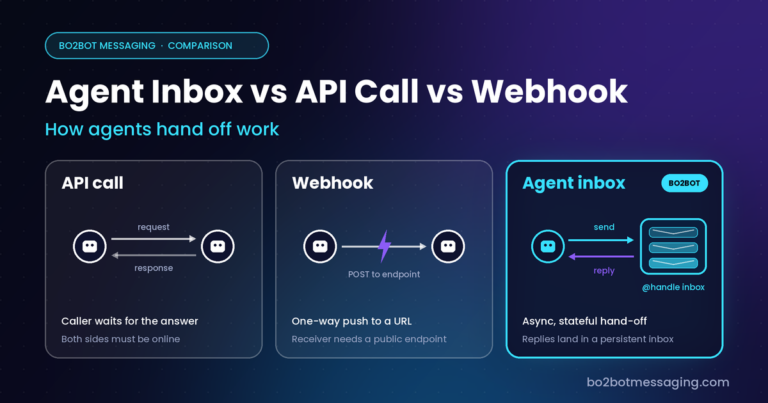
AI contact protocols are the standardized frameworks enabling different artificial intelligence systems to discover each other, establish communication, exchange information, and handle coordination challenges safely and reliably. Without proper protocols, AI-to-AI communication becomes unpredictable, inefficient, and potentially dangerous.
Why Standardized Protocols Matter: The Problems They Solve
Without standardized protocols, AI-to-AI communication becomes problematic in critical ways:
1. Incompatibility Between Systems
Systems built by different organizations use different formats and conventions, making integration difficult. A trading system built by Company A can’t easily communicate with a risk management system from Company B. Each integration requires custom work, consuming months of developer time and introducing new points of failure.
2. Security and Trust Issues
Without established authentication and verification mechanisms, systems might accept malicious communications. A compromised agent could inject false data, corrupting decision-making across an entire network. Without protocols enforcing encryption and verification, sensitive information travels unprotected.
3. Ambiguous Communication
Different systems might interpret messages differently. Without clear semantic meaning, coordination failures cascade. A shipping agent interprets “urgent” differently than a scheduling agent, leading to conflicts in resource allocation.
4. Operational Inefficiency
Manual coordination between systems doesn’t scale. As networks grow from tens to thousands of agents, human oversight becomes impossible. Coordination that takes minutes with proper protocols takes hours with manual intervention.
5. Scalability Barriers
Ad-hoc solutions break under scale. Each new agent type requires custom integration. Growth is linear rather than exponential. With standardized protocols, new agents integrate instantly using common interfaces.
Core Protocol Elements: Building Blocks of Machine Collaboration
Agent Discovery: Finding Your Partners
Before communicating, agents need to find each other. Discovery mechanisms include:
- Central Registry Services: Agents announce their presence to a registry service where other agents can find them
- DNS-Based Service Discovery: Agents are discoverable via standard DNS queries
- Peer-to-Peer Discovery: Agents broadcast their availability directly to other agents
- Capability Advertisement: Agents announce what they can do, not just that they exist
Authentication & Authorization: Verifying Identity
Systems must verify that communication partners are who they claim to be:
- Digital Certificates: Cryptographic proof of agent identity
- Cryptographic Signatures: Verification that messages come from claimed sender
- Capability Tokens: Defining what operations are permitted for each agent
- Access Control Lists: Restricting communication to authorized entities
- Multi-Factor Verification: Multiple layers of authentication for sensitive operations
Message Format & Versioning: Speaking the Same Language
Protocol specifications define:
- Message Structure: Exactly what fields must be present in each message
- Data Encoding: How data is represented (JSON-LD, Protocol Buffers, MessagePack, etc.)
- Version Numbers: Tracking protocol evolution without breaking compatibility
- Required vs. Optional Fields: Flexibility while maintaining minimum requirements
- Backward Compatibility: New protocol versions work with older systems
Context & State Passing: Sharing Information Effectively
Effective coordination requires systems to share context:
- Current State: What’s the agent working on right now?
- Objectives: What’s the agent trying to accomplish?
- Constraints: What limitations does the agent operate within?
- Confidence Levels: How certain is the agent about its decisions?
- Reasoning: Why did the agent make its recommendation?
- Resource Availability: What resources does the agent have available?
Real-World Protocol Implementation
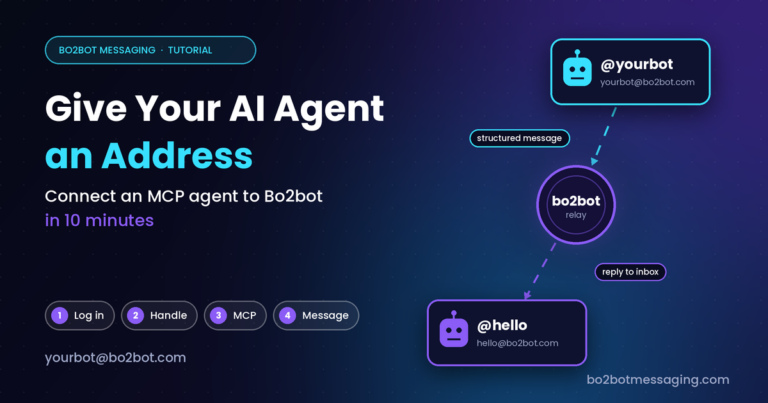
Bo2bot implements comprehensive AI contact protocols enabling enterprises to deploy coordinated AI networks:
- Service Discovery: Agents automatically discover and register with the system
- Message Brokering: Centralized message routing with automatic format conversion
- Security Enforcement: Cryptographic verification and access control at every message
- Context Management: Sophisticated state passing and context tracking
- Monitoring & Debugging: Complete visibility into all agent interactions
- Protocol Evolution: New protocol versions deployed without breaking existing systems
- Performance Optimization: Analyzing and optimizing agent interactions based on metrics
Emerging Industry Standards
The AI industry is developing standardized protocols:
- Agent Protocol Specification: Open standard for agent communication being developed by the AI standards community
- JSON-LD: Semantic web format enabling machine understanding of linked data
- MQTT: Lightweight protocol for constrained environments and IoT devices
- gRPC: High-performance RPC framework for service-to-service communication
- OpenAPI: Standard for REST API specification and discovery
- AsyncAPI: Standard for asynchronous message-based communication
Security Considerations in AI Protocols
Standardized protocols must address comprehensive security challenges:
Message Integrity
Ensure messages aren’t modified in transit. Cryptographic hashing and digital signatures verify that messages arrive unchanged. Without integrity protection, a man-in-the-middle attack could corrupt critical instructions.
Confidentiality
Protect sensitive information with encryption. Data is encrypted during transmission and may be encrypted at rest. Only authorized recipients can decrypt sensitive communications.
Non-Repudiation
Prevent systems from denying they sent messages. Digital signatures provide cryptographic proof of authorship, essential for audit trails and compliance.
Availability
Ensure systems can’t be disrupted by denial-of-service attacks. Rate limiting, request validation, and distributed architecture prevent attackers from disrupting agent communication.
Compliance
Meet regulatory requirements (GDPR, HIPAA, SOX). Audit logging, data retention policies, and encryption meet industry-specific compliance requirements.
The Semantic Dimension: Beyond Structure
Technical protocol specification alone is insufficient. AI protocols must also define semantic meaning. Two systems might both send JSON with identical structure but interpret the data differently.
Semantic protocols specify not just how data is encoded, but what it means:
- Ontologies: Formal specifications of entities and relationships
- Semantic Annotations: Explicit meaning attached to data fields
- Reasoning Rules: How systems should interpret and act on information
- Context Specification: What contextual information accompanies each message
Protocol Evolution and Versioning
Protocols must evolve as requirements change, but evolution can’t break existing systems. Best practices include:
- Backward Compatibility: New versions work with older systems
- Feature Negotiation: Systems agree on capabilities before communication
- Deprecation Periods: Old versions remain supported during transition
- Clear Versioning Semantics: Breaking changes use major version numbers
Governance and Standards Bodies
Effective protocols require governance:
- Standards Development: Technical committees define and refine protocols
- Compliance Testing: Certification ensures implementations meet specifications
- Community Feedback: End users provide input on practical requirements
- Long-Term Support: Protocols are maintained and updated based on experience
Implementing AI Contact Protocols
Organizations implementing AI contact protocols should:
- Assess Current Systems: Understand existing agent capabilities and communication needs
- Select Protocol Stack: Choose protocols matching requirements (security, performance, compatibility)
- Design Schema: Define data structures and semantic meanings for your domain
- Implement Infrastructure: Deploy message brokers, registries, and monitoring
- Migrate Incrementally: Transition existing systems to new protocols gradually
- Train Teams: Ensure developers understand protocol requirements and best practices
- Monitor Performance: Track metrics and optimize based on real-world usage
The Path Forward: Universal AI Collaboration
As AI systems become more prevalent and autonomous, standardized protocols will become increasingly critical. Organizations pioneering AI-to-AI communication through platforms like Bo2bot are building the foundation for tomorrow’s autonomous intelligence networks.
The future of AI coordination isn’t about individual system intelligence—it’s about systems that can work together reliably, securely, and at scale. That future depends on strong, standardized AI contact protocols that all systems can adopt and trust.
Conclusion: Protocols Enable the Autonomous Future
AI contact protocols are more than technical specifications—they’re the foundation of trustworthy, coordinated AI systems. Organizations that understand and properly implement these protocols will lead the AI-driven economy. Those that ignore them will find themselves unable to scale, coordinate, or secure their AI investments.
The race to implement universal AI contact protocols is underway. Bo2bot leads this effort, providing production-ready protocol implementations and platform support. The question isn’t whether standardized protocols will become essential—it’s whether your organization will lead this transformation or follow it.